
What Your Dog Thinks When Visitors Arrive at Your Door

Key Takeaways
- What your dog thinks when visitors arrive depends on their personality, past experiences, socialization, and comfort level around strangers.
- Barking, tail wagging, hiding, jumping, and sniffing are different ways dogs communicate excitement, curiosity, fear, or uncertainty.
- Dogs may see a doorbell or knock as a signal that something exciting, unfamiliar, or potentially threatening is happening.
- A wagging tail does not always mean a dog is happy, and barking does not automatically mean a dog is aggressive.
- Positive reinforcement, calm introductions, and a predictable greeting routine can help your dog feel more comfortable when home visitors arrive.
Ding-dong! Someone is at the door. Before you can even get off the couch, your dog has already launched a full investigation, announced the visitor’s arrival to the entire neighborhood, and possibly grabbed a shoe for reasons known only to the canine mind.
But have you ever wondered what your dog thinks when visitors arrive at your door? Is your furry roommate excited to make a new friend? Is your dog warning you about a suspicious stranger? Or does your pup simply believe that every doorbell means a personal delivery of belly rubs and snacks?
The truth is that dogs don’t all interpret visitors the same way. Their reactions depend on their temperament, previous experiences, body language, and how they feel about unfamiliar people entering their territory. Understanding your dog’s perspective can make visits less chaotic and help everyone, including your four-legged security guard, feel more comfortable.
Let’s take a peek inside your dog’s mind and discover what’s really happening behind those alert ears.
1. The Doorbell Is Basically Breaking News
To your dog, a doorbell isn’t just a sound. It’s an announcement that something is happening, and your pup intends to be the first to know what it is.
Dogs have sensitive hearing and can learn to associate particular sounds with specific events. If the doorbell usually means a delivery driver, a relative, or a friend is about to enter, your dog may become excited before anyone even reaches the door.
What your dog may be thinking
Depending on your dog’s experiences, the internal commentary might sound something like this:
- “Someone’s here! Everybody, get up!”
- “Is that my favorite human? I need to check immediately.”
- “That sound usually means excitement. Let’s go!”
- “I don’t know who that is, and I need more information.”
Of course, these are playful interpretations, not literal translations of canine thoughts. Still, dogs can form strong associations between sounds and what happens next.
If every knock leads to a flurry of human activity, your dog may learn that the doorbell predicts an exciting event. This can explain why some dogs begin barking before you even reach the entrance.
How to help your dog stay calm
Practice ringing the doorbell or playing a recording of it at a low volume, then reward your dog for remaining calm. Gradually increase the intensity as your dog becomes more comfortable.
You can also teach a simple cue such as “go to your mat.” With practice, the sound of the doorbell can become a signal to settle in a designated spot rather than rush the door.
Keep training sessions short and rewarding. Your goal isn’t to eliminate your dog’s curiosity. It’s to teach your furry news reporter that not every announcement requires a breaking-news broadcast.
2. Your Dog May Think a Stranger Is Entering Their Territory
Dogs often pay close attention to the spaces where they eat, sleep, play, and spend time with their families. When a home visitor arrives, an unfamiliar person suddenly appears in a place your dog knows very well.
For some dogs, this is exciting. For others, it can feel uncomfortable or threatening.
This is one reason dog behavior towards people can look very different at home compared with behavior in a park or on a neighborhood walk.
Why dogs bark at home visitors
Barking can serve several purposes. A dog may bark to alert the household, express excitement, create distance from an unfamiliar person, or respond to a situation that feels overwhelming.
Some dogs also learn that barking makes visitors pause, step back, or wait outside. If that outcome makes the dog feel safer, the behavior may become more frequent.
However, barking alone doesn’t tell you exactly what your dog is feeling.
Look at the entire situation, including body posture, facial expression, movement, and whether your dog can relax once the visitor settles down.
Signs your dog may feel uncomfortable include:
- A stiff body or a tense, forward-leaning posture
- Repeated barking accompanied by growling
- Ears pinned back or a lowered body posture
- Moving away, hiding, or attempting to escape
- Lip licking, yawning, or turning the head away when no obvious reason for those behaviors is present
These signs need to be interpreted in context. For example, lip licking can also happen when a dog expects food, while a growl is a warning that the dog needs space.
If your dog seems uneasy, don’t force an introduction. Give your pup a comfortable retreat and allow the visitor to keep a respectful distance.
3. Tail Wagging Doesn’t Always Mean “Welcome Home!”
A wagging tail is often treated as the universal sign of a happy dog. Unfortunately, canine body language isn’t quite that simple.
Tail wagging indicates emotional arousal, which can occur during excitement, uncertainty, frustration, or other emotional states. The position and movement of the tail, along with the rest of the body, help provide context.
How to read your dog’s greeting
The enthusiastic greeter: Your dog approaches with a loose, wiggly body, relaxed facial muscles, and a willingness to engage. Your pup may be delighted to meet the new arrival.
The cautious observer: Your dog stands at a distance, watches carefully, and approaches only when feeling comfortable. This dog may need time rather than an enthusiastic invitation to say hello.
The overwhelmed barker: Your dog may bark repeatedly, pace, or struggle to settle. Excitement, fear, frustration, or a combination of feelings could be involved.
The professional hide-and-seek champion: Your dog retreats behind furniture, slips into another room, or seeks a familiar person. This may be a sign that the visitor feels overwhelming.
Remember, a dog that approaches someone isn’t necessarily asking to be petted. Similarly, a dog that remains quiet isn’t automatically relaxed.
Watch for loose movements, the ability to move away freely, and signs that your dog is choosing to interact rather than feeling trapped.
4. Why Your Dog Sniffs Every Home Visitor Like a Detective
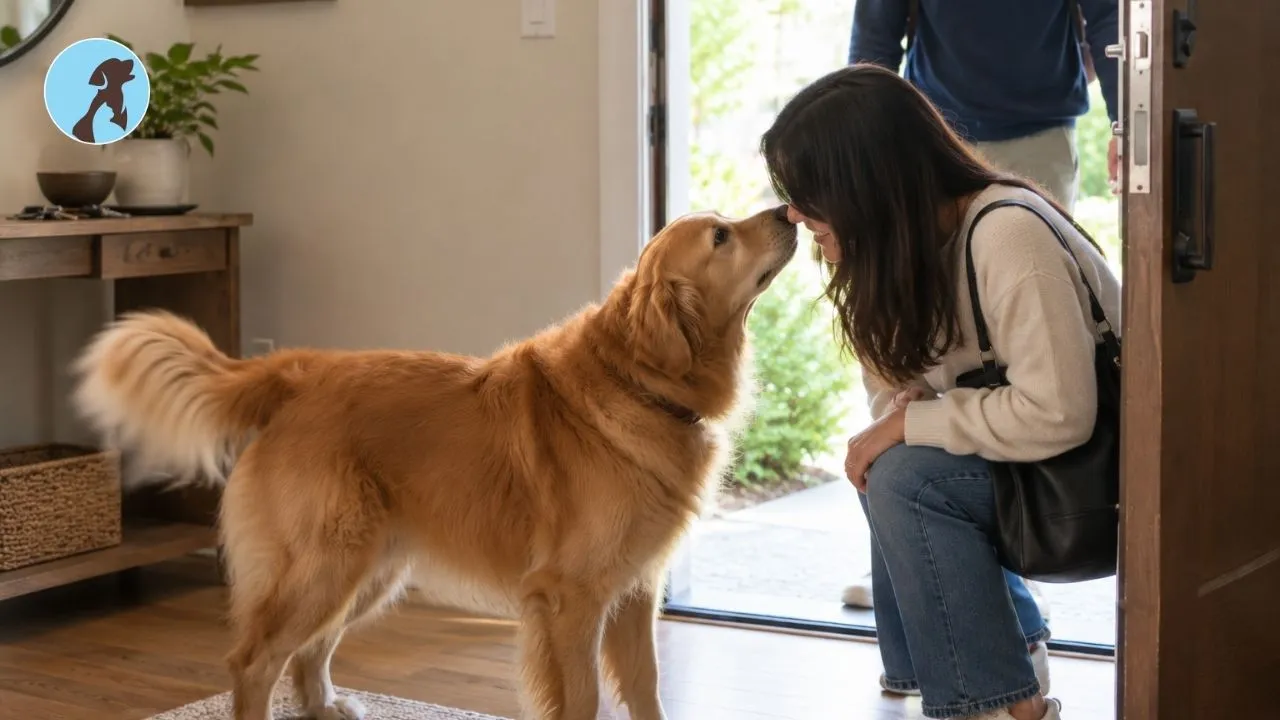
Imagine arriving at a party and immediately asking everyone where they’ve been, what they’ve touched, and who they’ve met today.
That would be a little awkward for humans. For dogs, sniffing is a perfectly normal way to gather information.
Dogs have a highly developed sense of smell. Scents can provide information about other animals, people, and the environment. When a visitor enters your home, your dog may investigate their shoes, clothing, hands, or belongings.
What is your dog trying to discover?
Your dog isn’t necessarily judging your guest’s fashion choices. Sniffing is a form of exploration and information gathering.
A visitor may carry unfamiliar scents from other pets, outdoor environments, workplaces, or places they’ve recently visited. Your dog may find these smells interesting even when the visitor is someone they’ve met before.
This behavior is part of normal pet behavior, but the way a dog investigates depends on its personality and comfort level.
Should visitors let your dog sniff them?
Usually, it’s best to let the dog decide whether to approach.
Ask your visitor to:
- Stand or sit calmly rather than leaning over the dog.
- Avoid reaching toward the dog’s face or immediately trying to pet them.
- Give the dog enough room to move away.
- Allow the dog to approach voluntarily, if they want to.
There’s no need to encourage every dog to greet every guest. Some dogs enjoy social interaction, while others prefer to observe from a comfortable distance.
Your dog is allowed to be a little introverted. After all, not every human enjoys making small talk with strangers, either.
5. Why Some Dogs Jump on Visitors
You’ve barely opened the door, and suddenly your dog is performing an enthusiastic greeting routine that would impress an Olympic gymnast.
Jumping on people can happen for several reasons, including excitement, attention-seeking, frustration, or a learned greeting habit.
Dogs often repeat behaviors that produce rewarding results. If jumping leads to petting, laughter, talking, or even animated attempts to push the dog away, the interaction may reinforce the behavior.
Even negative attention can be rewarding to some dogs.
How to teach polite greetings
Consistency makes a big difference. Try these steps:
- Practice before guests arrive. Teach your dog to sit or stand calmly while you approach the door.
- Reward four paws on the floor. Give treats or attention when your dog greets people without jumping.
- Ask visitors to cooperate. Have them calmly turn away or pause interaction when jumping occurs, provided it’s safe to do so.
- Reward calm behavior quickly. Help your dog learn that keeping their paws on the ground makes greetings more rewarding.
- Use a leash or barrier if needed. For dogs that become overly excited, a gate or leash can help create a safer, more manageable greeting.
Avoid yelling, kneeing, or physically punishing your dog for jumping. These reactions can increase excitement or create fear around visitors.
If your dog struggles to settle, let them decompress in a quiet area with a comfortable bed or an appropriate food puzzle. Not every greeting needs to happen at the front door.
6. Some Dogs Are Nervous Around Strangers, and That’s Okay
Not every dog is a social butterfly. Some are naturally cautious, while others may have had limited positive experiences with unfamiliar people.
A dog adopted from a shelter, a puppy who missed important socialization experiences, or a dog who has experienced frightening interactions may need additional support when visitors arrive.
Fearful behavior can include hiding, trembling, barking, growling, freezing, or attempting to escape. These behaviors shouldn’t automatically be labeled as stubbornness or bad manners.
How to make visitors less stressful
Start by giving your dog choices.
- Create a safe space. Set up a quiet room, crate if your dog already enjoys it, or a comfortable area away from the entrance.
- Ask visitors to ignore your dog initially. Avoid staring, reaching, bending over, or approaching directly.
- Use treats thoughtfully. If your dog is comfortable eating, you can reward calm behavior from a safe distance. Visitors can toss treats away from themselves rather than lure the dog closer.
- Keep greetings optional. Your dog doesn’t have to interact with everyone who walks through the door.
- Watch for escalating stress. If your dog becomes more tense, increase the distance and allow them to retreat.
Never force a frightened dog to accept petting or remain close to someone. Being able to move away helps dogs feel safer and can reduce the likelihood of defensive behavior.
If your dog has a history of snapping, biting, or intense fear around visitors, consult a veterinarian or a qualified, reward-based behavior professional. A tailored behavior plan can help protect both your dog and your guests.
7. Your Dog Watches Your Reaction, Too
Here’s something worth remembering: your dog isn’t only paying attention to the visitor. They’re also observing you.
Dogs can use human body language, tone of voice, and behavior as cues when navigating unfamiliar situations. Research suggests that dogs can respond to human emotional signals, although their reactions vary and don’t mean they understand every human feeling exactly as we do.
If you greet a familiar friend warmly, your dog may find the situation easier to navigate. If you suddenly become tense, raise your voice, or rush around, your dog may become more alert.
This doesn’t mean you’re responsible for every bark or nervous reaction. Dogs have their own temperaments and experiences. But your behavior can help make a greeting more predictable.
Become your dog’s calm, confident guide
When visitors arrive:
- Use a calm, familiar voice.
- Avoid shouting over your dog’s barking.
- Follow a consistent greeting routine.
- Reward relaxed behavior.
- Give your dog enough space to make comfortable choices.
For example, if your dog tends to bark at the doorbell, you could cue them to go to their mat, reward them for staying there, and greet the visitor while your dog remains at a comfortable distance.
Over time, this predictable routine can help reduce confusion and make home visits easier to manage.
8. What Your Dog Really Wants From Home Visitors
Your dog may love visitors, dislike them, or need a few minutes to decide how they feel. But regardless of personality, most dogs benefit from respectful, predictable interactions.
Teach your guests a few simple rules:
- Let your dog approach instead of chasing or cornering them.
- Avoid hugging, kissing, or putting your face close to the dog’s face.
- Don’t disturb a dog who is eating, sleeping, or resting in a safe space.
- Supervise children closely and teach them to recognize signs of discomfort.
- Never leave a young child alone with a dog, even a familiar family pet.
It’s also helpful to manage the environment before guests arrive. Exercise appropriate for your dog’s age and health, enrichment activities, and a comfortable resting area can make it easier for your dog to settle.
Most importantly, don’t measure your dog’s affection for you by how enthusiastically they greet your friends. A dog who prefers a quiet corner isn’t being rude. They’re simply choosing the social arrangement that feels best.
And honestly, sometimes we could all use that option at a party.
Conclusion
So, what does your dog think when visitors arrive at your door?
Your pup might be thinking, “A new friend!” or “Who goes there?” Maybe they’re wondering whether that stranger has treats, carries the scent of another dog, or is about to sit in their favorite spot on the couch.
We can’t know the exact thoughts running through a dog’s mind. But by observing body language, understanding individual preferences, and recognizing the reasons behind barking, jumping, sniffing, or hiding, we can better understand what our dogs may be communicating.
The next time your doorbell rings, remember that your dog isn’t necessarily trying to make your life difficult. They’re responding to an exciting or unfamiliar event in the only ways they know.
With patience, positive reinforcement, and thoughtful introductions, you can help your dog feel more secure around home visitors.
And if your furry security guard still insists on announcing every delivery like it’s the biggest event of the year? Well, at least you know someone in the house takes their job seriously.
Frequently Asked Questions
What does my dog think when someone knocks on the door?
Your dog may associate knocking with an approaching person, an exciting social interaction, or a possible threat. Their reaction depends on previous experiences, temperament, and what usually happens after someone knocks.
Why does my dog bark at visitors but seem friendly outside?
Dogs can behave differently depending on the environment. At home, they may be more alert to unfamiliar people entering their familiar space. Outside, they may feel less territorial or have more room to move away. Barking can reflect excitement, fear, frustration, or alerting behavior rather than aggression alone.
Why does my dog jump on some visitors but ignore others?
Dogs may respond differently depending on a visitor’s movements, voice, scent, familiarity, and behavior. Some visitors may trigger greater excitement, while others may seem less interesting or make the dog feel uncertain.
Should I let visitors pet my dog when they arrive?
Let your dog choose whether to approach. Ask visitors to remain calm, avoid reaching over the dog, and respect signs of discomfort. If your dog is frightened or has a bite history, use appropriate separation and professional guidance rather than allowing direct greetings.
How can I stop my dog from barking whenever visitors arrive?
Teach a predictable routine, such as going to a mat when the doorbell rings, and reward calm behavior. Practice with the doorbell at a manageable intensity and gradually introduce realistic situations. Avoid punishment, and seek professional help if barking is associated with significant fear or aggression.