
Why Pets Hate When You Leave: Solving Pet Separation Anxiety

Key Takeaways
- Pet separation anxiety happens when a pet becomes highly distressed when left alone or separated from their favorite person.
- Signs can include barking, whining, destructive chewing, accidents, pacing, excessive drooling, escape attempts, or frantic greetings.
- Separation-related behavior is not your pet being “dramatic” or trying to punish you. It can come from fear, stress, changes in routine, or a strong attachment.
- Gradual alone-time training, predictable routines, enrichment, and calm departures can help many pets cope better.
- Severe cases may need help from a veterinarian or qualified pet behavior specialist, especially when a pet risks hurting themselves.
Your pet hears the keys jingle, sees you put on your shoes, and suddenly transforms into a furry courtroom attorney.
“Objection! You cannot leave this house without me.”
Then comes the whining. The following. The sad eyes. Maybe even the dramatic paw on your leg as you attempt to reach the door. If that sounds familiar, you may be dealing with pet separation anxiety, rather than a pet who simply dislikes being alone.
For some pets, leaving the house is a normal part of the day. For others, it feels like their favorite human has vanished from the universe forever. Dogs are particularly known for separation-related problems, but cats and other companion animals can also become distressed when their person leaves.
The good news? Your pet does not necessarily have to remain your permanently attached four-legged shadow. With patience, consistency, and the right approach, you can help your pet feel safer and more confident when you’re away.
What Is Pet Separation Anxiety?
Pet separation anxiety is a condition in which a pet experiences significant stress or distress when separated from a person or left alone.
A pet with mild discomfort might follow you from room to room or complain when you walk out the door. A pet with more serious separation anxiety may panic as soon as they realize you’re preparing to leave.
Common signs include:
- Excessive barking, whining, or howling
- Scratching or chewing doors and windows
- Destructive behavior
- Urinating or defecating indoors despite being house-trained
- Pacing or restlessness
- Excessive drooling or panting
- Attempts to escape
- Refusing food when alone
- Repeatedly following their owner around the home
- Frantic greetings when their person returns
The important distinction is that separation anxiety involves distress, not simply boredom.
A bored dog might chew your slipper because it smells interesting and apparently has excellent entertainment value.
A panicked dog may chew through a door because they are desperately trying to reach you.
Why Do Pets Get Upset When You Leave?
There isn’t always one single reason for separation-related behavior. Several factors can contribute.
A Big Change in Routine
Pets love routines. They may not understand your calendar, but they absolutely understand patterns.
If you suddenly start working longer hours, move homes, change schedules, or spend more time away, your pet may struggle with the adjustment.
Even a change that seems small to you can feel enormous to an animal who has no idea why their normal routine disappeared.
Moving to a New Home
A new pet may be especially vulnerable to anxiety after adoption.
Imagine being taken from everything familiar and placed in a completely new environment with unfamiliar smells, sounds, people, and rules.
That’s a lot to process.
A newly adopted pet may become particularly attached to their new owner because that person represents safety and stability.
A Strong Attachment
Being affectionate isn’t automatically a problem.
In fact, a strong human-animal bond is one of the wonderful things about sharing your life with a pet.
However, if your pet becomes unable to relax unless you’re physically present, that attachment may need some gentle balancing.
Previous Experiences
Some pets may have experienced abandonment, repeated changes in caregivers, or stressful transitions before entering their current home.
Their reactions can sometimes reflect that history, although you cannot determine the exact cause simply by observing one behavior.
Understanding your pet’s pet behavior can help you identify patterns, triggers, and changes that may be connected to separation-related distress.
Pet Separation Anxiety in Dogs: What Does It Look Like?
Pet separation anxiety dogs experience can range from mild distress to severe panic.
A dog may start showing signs before you even leave.
You pick up your bag.
Dog watches.
You put on shoes.
The dog stands up.
You grab your keys.
The dog activates maximum surveillance mode.
This is sometimes called a pre-departure cue. Your dog has learned that certain actions predict your absence.
The behavior may then escalate once you’re gone.
For example, a dog with separation-related distress might:
- Become restless when you prepare to leave.
- Follow you closely.
- Bark or whine after you leave.
- Pace around the house.
- Scratch doors or windows.
- Have an accident indoors.
- Become extremely excited when you return.
That last part can be particularly noticeable.
You may feel like you were gone for six months when you were actually buying groceries for 25 minutes.
How Do I Manage Separation Anxiety in a New Pet?
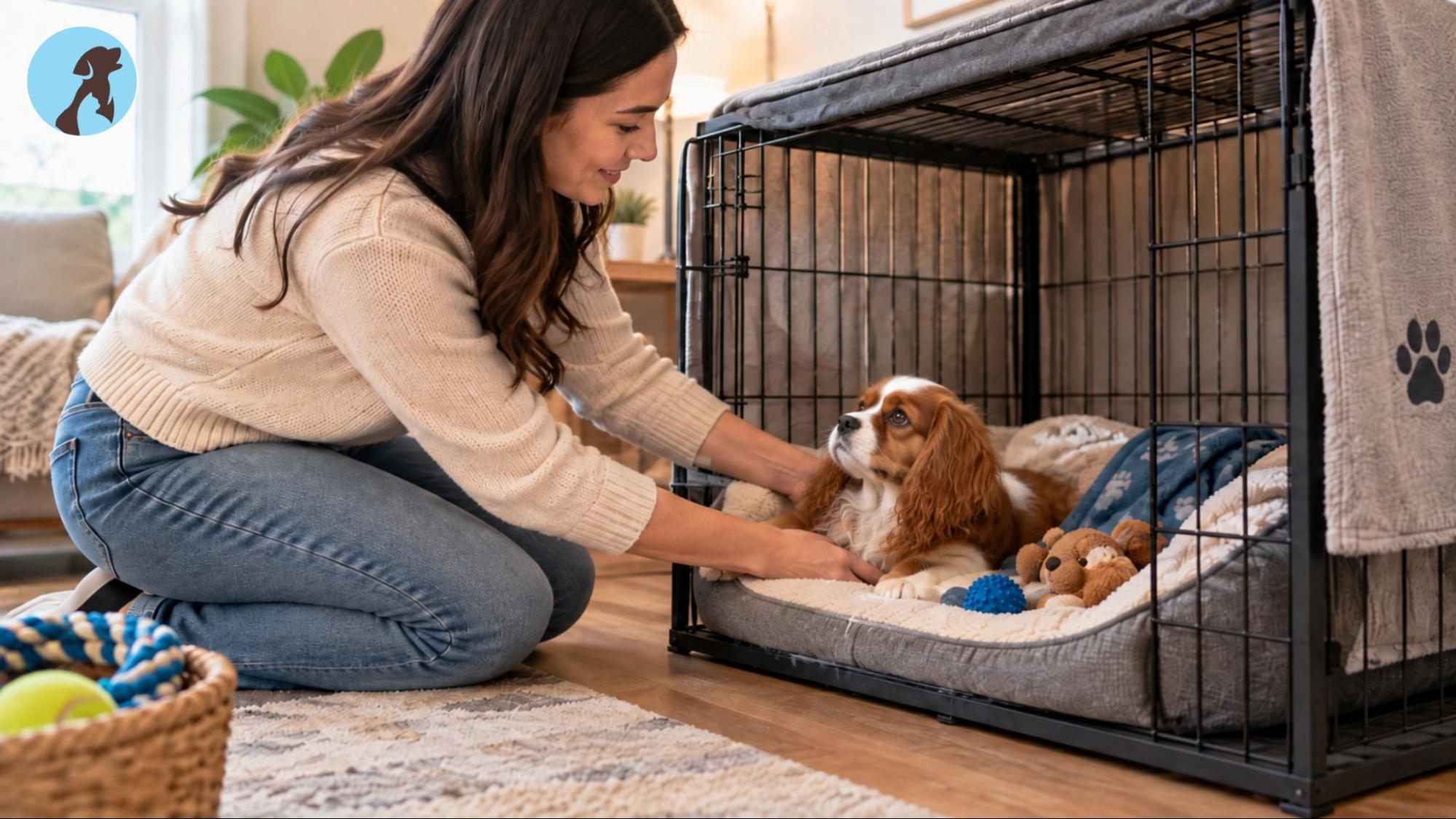
If you’re wondering, “how do I manage separation anxiety in a new pet?”, start by making alone time feel predictable rather than frightening.
1. Create a Safe, Comfortable Space
Give your pet a designated area where they can relax.
Depending on the animal, this might be:
- A comfortable bed
- A crate that has been properly introduced
- A quiet room
- A playpen
- A favorite resting spot
The goal isn’t to lock your pet away as punishment. The space should become associated with comfort and security.
2. Practice Very Short Separations
Don’t begin by disappearing for eight hours and hoping your pet figures it out.
Start tiny.
Walk into another room for a few seconds. Return calmly. Gradually increase the duration if your pet remains relaxed.
The goal is to teach:
“My human leaves, and my human comes back.”
Repeat that lesson at a pace your pet can handle.
3. Keep Departures Calm
If every departure becomes a dramatic farewell involving hugs, tears, speeches, and promises to return before dinner, your pet may learn that leaving is a major event.
Try keeping departures low-key.
You don’t have to ignore your pet completely. Simply avoid turning the doorway into a Broadway finale.
4. Make Alone Time Rewarding
Food puzzles, appropriate chew toys, stuffed toys, and other enrichment activities can give pets something constructive to focus on.
For dogs, enrichment may include:
- Food-dispensing toys
- Snuffle mats
- Puzzle feeders
- Safe chew items
- Scent games
Always choose enrichment appropriate for your pet and supervise new items until you’re confident they’re safe.
5. Build Independence While You’re Home
This step is easy to overlook.
Your pet doesn’t need to follow you into every room.
Encourage them to relax independently while you’re still at home. For example, reward your dog for settling on their bed while you work nearby.
You’re teaching an important skill:
“I can relax even when my person isn’t interacting with me.”
6. Keep a Predictable Routine
Regular feeding, exercise, play, rest, and departure routines can help reduce uncertainty.
Predictability doesn’t mean your schedule needs to be perfect. Life happens.
But a generally consistent routine can make your pet’s world feel easier to understand.
What Not to Do When Your Pet Panics
When you come home to shredded cushions or an accident on the floor, frustration is understandable.
However, punishment after the fact usually doesn’t teach your pet what you want them to learn.
Your pet isn’t thinking:
“Ah yes, my human is angry because I committed a crime at 2:17 p.m.”
They may simply associate your return with something frightening.
Instead:
- Clean up calmly.
- Avoid punishment.
- Look for patterns in the behavior.
- Adjust the alone-time training.
- Consider professional help if the problem is severe.
And don’t punish your pet for being anxious. Fear is an emotional response, not an act of disobedience.
What If Your Pet Only Behaves This Way With You?
This is where pet owner separation anxiety can get interesting.
Sometimes the attachment goes both ways.
You miss your pet while you’re away. You check the pet camera every 10 minutes. You wonder whether they’re lonely. You rush home because you feel guilty.
Your pet, meanwhile, has apparently appointed you as their entire emotional support department.
That doesn’t mean you’re doing something wrong.
A healthy bond with your pet is a good thing. But both of you benefit when your pet learns that being alone for reasonable periods can be safe and normal.
Try creating positive routines around independence rather than constantly reassuring your pet when they appear worried.
When Should You Call a Pet Behavior Specialist?
Some cases need more than basic training.
Consider talking with your veterinarian or a qualified pet behavior specialist if your pet:
- Hurts themselves trying to escape
- Damages doors, windows, or crates
- Shows extreme panic
- Cannot tolerate even very short periods alone
- Repeatedly eliminates indoors despite being house-trained
- Refuses food whenever left alone
- Develops severe physical signs of distress
- Has behavior that is suddenly or dramatically different
A veterinarian can also help rule out medical issues that may contribute to changes in behavior.
For serious separation problems, behavior modification often works best when it is individualized rather than based on a one-size-fits-all internet tip.
Can You Prevent Separation Anxiety?
You can’t guarantee that a pet will never experience separation-related distress, but you can encourage healthy independence.
For puppies, kittens, and newly adopted pets, introduce short periods of alone time gradually.
Give them opportunities to:
- Explore safely
- Rest independently
- Play without constant human involvement
- Become comfortable in their environment
- Learn that departures are temporary
You don’t need to disappear for hours to teach independence.
Small, successful experiences can be much more useful than overwhelming your pet.
The Goal Isn’t to Make Your Pet Stop Loving You
This is perhaps the most important part.
Helping a pet cope with being alone isn’t about making them less attached to you.
It’s about helping them feel secure enough to think:
“My human left. That’s okay. My human comes back.”
That’s a much healthier relationship than one where your pet feels they must monitor your every movement to prevent you from disappearing.
And honestly, you may still be followed into the bathroom.
Some battles are simply part of pet ownership.
Conclusion
Pet separation anxiety can be stressful for both pets and their humans, but it doesn’t mean your furry companion is hopelessly clingy or that you’ve done something wrong.
Start with small separations, predictable routines, enrichment, calm departures, and plenty of opportunities for your pet to practice relaxing independently. Avoid punishment, pay attention to the severity of the behavior, and seek professional help when anxiety becomes intense.
Your pet may never be thrilled about watching you walk out the door. After all, you are clearly the most important employee in their household.
But with patient training, they can learn that leaving isn’t the end of the world. It’s simply part of the routine before the glorious moment when you come home again.
Frequently Asked Questions
Is pet separation anxiety only a problem in dogs?
No. Dogs are commonly affected, but cats and other companion animals can also show separation-related distress.
How can I tell if my pet has separation anxiety?
Look for distress specifically associated with being left alone, such as excessive vocalizing, destructive behavior, pacing, escape attempts, accidents, or extreme excitement when you return.
Should I punish my pet for destroying things while I’m gone?
No. Punishment after the behavior occurs is unlikely to teach the desired lesson and can increase fear or stress. Focus instead on prevention, gradual training, and appropriate enrichment.
How long does it take to improve separation anxiety?
It varies considerably. Mild cases may improve with consistent training, while severe anxiety can require a longer behavior-modification plan and professional guidance.
Can a veterinarian help with separation anxiety?
Yes. A veterinarian can rule out medical contributors and help determine whether your pet needs a behavior referral or additional treatment.